October Is Still Hurricane Season in Sarasota: A Solar, Battery & Roof Checklist
Florida hurricane season runs through November 30, so Sarasota homeowners should not treat October as the finish line. The Gulf may be quieter on a given week, but the house should remain ready for tropical rain, wind and utility outages until the season is actually over.
Mirasol Solar has served Florida since 1977 and provides solar electric, battery storage, roofing and service support in Sarasota and surrounding Southwest Florida communities.
1. Review the Roof Before the Next Heavy Rain
Look safely from the ground for missing shingles, tile damage, loose flashing or gutter issues. Inside, check ceilings and attic areas for new stains. If the roof needs attention, Mirasol’s Sarasota roofing services can coordinate roof work with existing or planned solar.
2. Confirm Solar Monitoring Is Normal
Check production and equipment status before severe weather. If the app is not updating or the system shows alerts, use Mirasol’s service request process rather than waiting for storm week.
3. Review Battery Backup Priorities
Know what the battery actually supports. Refrigeration, communications, lights, medical equipment and selected cooling may be higher priorities than large discretionary loads.
Mirasol’s guide to home battery storage in Florida explains how storage can add outage resilience and energy independence.
4. Secure Outdoor Hazards
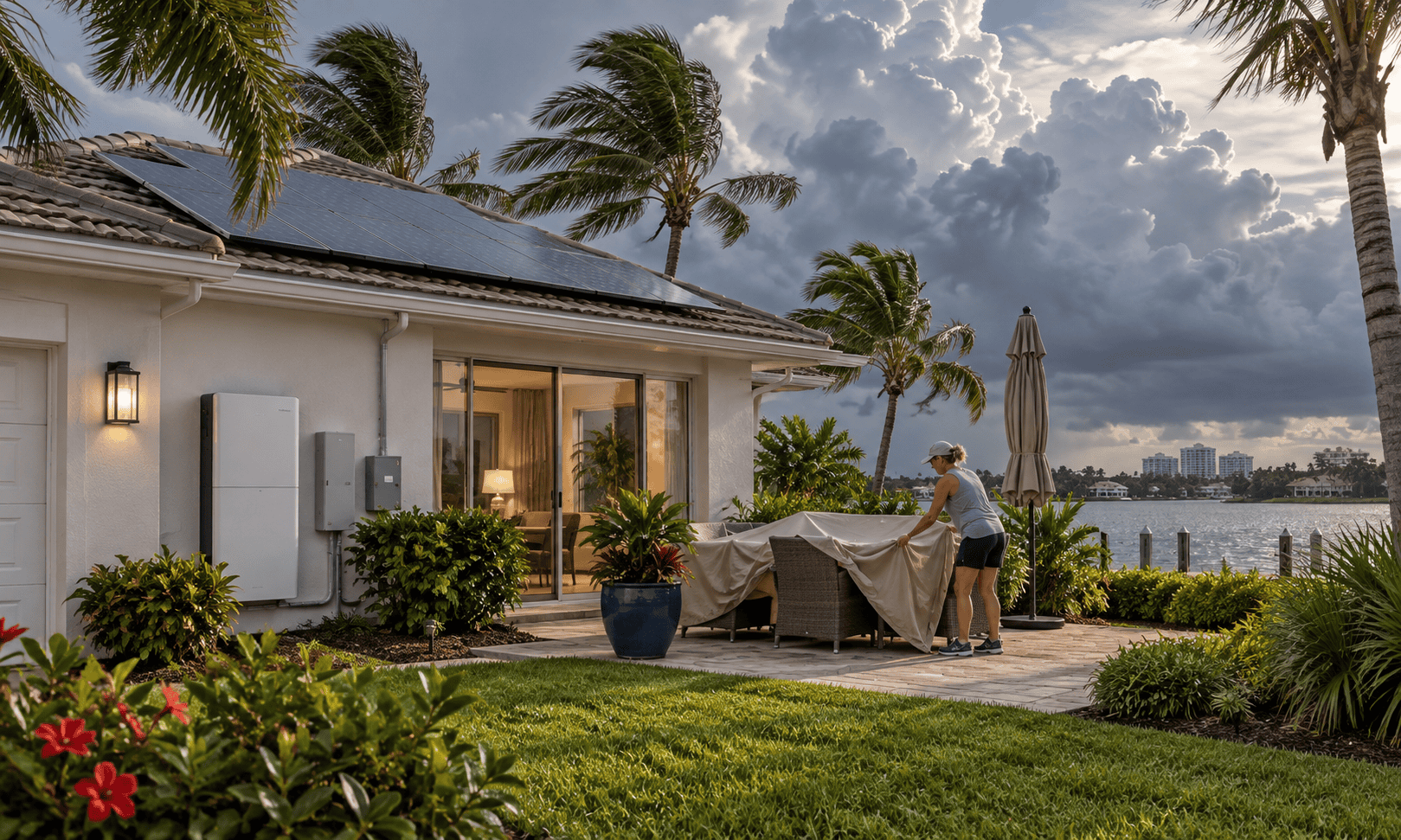
Patio furniture, decorations, loose branches and other objects can become hazards in high winds. Secure what you can safely move and use qualified tree professionals for dangerous limbs.
5. Do Not Remove Solar Panels for a Forecast Storm
Solar arrays are designed as permanent rooftop systems. Do not loosen or remove modules yourself. Mirasol’s Florida hurricane solar guide provides more detail.
6. Keep Seven Days of Emergency Supplies
Florida emergency guidance encourages residents to prepare at least seven days of supplies. Backup energy is only one part of hurricane readiness.
Sarasota Storm Readiness Is a Whole-Home Energy Question
Solar, battery storage and roofing are closely related during hurricane season. The roof protects the structure, the solar array generates energy and the battery determines what can remain powered when the grid is unavailable. Reviewing them separately can miss how one project affects the others.
Know the Difference Between Backup Capacity and Backup Power
Battery capacity describes how much energy is stored, while power describes how much electrical load the system can support at one time. A home may have enough stored energy for essential devices but still be unable to start several large appliances simultaneously.
Before a Storm, Review the Household’s Energy Priorities
- Refrigeration and freezer
- Medical and accessibility equipment
- Internet and communications
- Lighting and security
- Fans or selected cooling
- Well or pump equipment when applicable
Discuss those priorities with the installer when sizing or upgrading storage.
Keep Roofing and Solar Documentation Together
Save roof warranty information, solar equipment models, installer contacts, battery details and recent photos in one accessible location. If damage occurs, coordinated records make it easier to communicate with roofing, solar and insurance professionals.
Check the Storm Plan for Your Specific Sarasota Home
A coastal property, inland subdivision and older home may have different storm vulnerabilities. Flood zone, roof age, tree exposure, electrical service and evacuation plan all shape preparedness. Solar and battery backup can improve energy resilience, but they should sit inside a broader property-specific plan.
Do a Pre-Storm Service Review
If the solar monitoring platform has shown intermittent errors, if the roof has a known leak or if the battery has not been tested recently, October is a better time to request service than the days immediately before a tropical system. Keep model numbers and previous service records handy when scheduling.
After the Season, Keep the Maintenance Habit
When hurricane season ends, use the same checklist as an annual maintenance record. Note roof condition, solar production, battery status and any repairs completed during the year. Consistent records make future troubleshooting easier.
Frequently Asked Questions
Is October still hurricane season in Sarasota?
Yes. The Atlantic hurricane season continues through November 30.
Will solar panels keep the house on during an outage?
Standard grid-tied solar usually shuts down with the grid. Properly configured solar-plus-battery systems can support selected loads while isolated.
Can Mirasol service systems installed by another company?
Mirasol’s service program accepts requests for existing solar systems and can help determine available support.
Stay Ready Until the Season Is Actually Over
October is a good month to recheck the systems that protect and power the home. Contact Mirasol Solar for solar, battery, roofing or service needs in Sarasota and Southwest Florida.