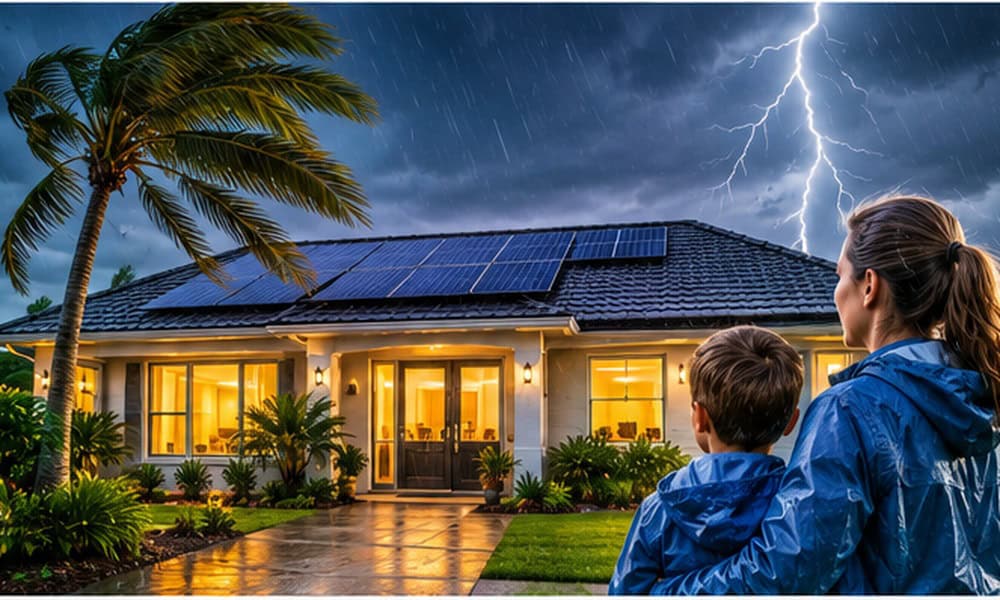
If your Florida home already has solar, hurricane preparation should include the energy system on your roof. You do not need to become your own solar technician, and you should never climb onto a roof before or after severe weather. What you can do is confirm that monitoring is working, review battery settings, remove obvious ground-level hazards and know who to call if something looks different after the storm.
Mirasol Solar has served Florida homeowners since 1977 and provides solar installation, storage and ongoing solar service for systems installed by Mirasol and other companies.
1. Confirm That Solar Monitoring Is Working
Open your solar monitoring app or portal before severe weather reaches your area. Confirm that the data is current and that you are not seeing unexplained equipment alerts.
This gives you a useful pre-storm baseline. If production appears different after the storm, you will have something to compare it with.
If the system is not communicating, do not assume that means the solar equipment has failed. Monitoring issues can involve internet connections, communications hardware or account settings. If you are unsure, request professional support.
2. Review Your Battery Backup Settings
If you have battery storage, familiarize yourself with the app and backup settings before an outage occurs.
Depending on the equipment, homeowners may be able to maintain a battery reserve intended for backup use. Review the manufacturer’s instructions and make sure you understand which circuits or household loads are supported by the system.
Mirasol offers home battery storage solutions designed to work with solar and provide homeowners with greater energy control and resilience.
3. Know Which Loads Matter Most
An outage is easier to manage when everyone in the household understands the priorities.
Make a short list of essential loads such as:
- Refrigerators and freezers
- Medical devices
- Internet and communications
- Basic lighting
- Security equipment
- Fans or selected cooling
- Essential outlets and chargers
Reducing unnecessary loads during an outage can help stored energy last longer.
4. Look at the Property From the Ground
You should not climb onto a solar roof to prepare it for a storm. Instead, walk the property safely from the ground and look for things that could become hazards.
Pay attention to loose outdoor items, weakened tree limbs and debris that could potentially strike the home. Move patio furniture, decorations and other movable objects to a secure location when severe weather is expected.
Tree trimming near power lines or roof areas should be handled by qualified professionals.
5. Do Not Remove Solar Panels Just Because a Storm Is Coming
Homeowners sometimes wonder whether solar panels should be removed when a hurricane is forecast. A properly installed solar system is designed as a permanent part of the home.
Do not attempt to loosen, remove or alter rooftop solar equipment yourself. Improper handling creates electrical and fall hazards and may compromise the mounting system.
For more information about how solar systems are designed for Florida conditions, read Mirasol’s guide to solar panels and hurricane protection.
6. Keep Your Solar Documentation Accessible
Storm preparation is not only physical. Keep useful system information somewhere you can access it even if you have to leave the property.
That may include:
- Solar equipment model information
- Battery information
- Monitoring login details
- Installation records
- Warranty documents
- Photos of the system and home before the storm
- Your solar service provider’s contact information
Having this information organized can make post-storm troubleshooting much easier.
7. Know What to Do After the Storm
After severe weather passes, put personal safety first. Follow local emergency guidance and stay away from downed electrical lines, standing water around electrical equipment and visibly damaged wiring.
From the ground, look for obvious changes such as:
- Broken or displaced panels
- Debris resting on the array
- Visible roof damage
- Loose or hanging electrical components
- Battery or inverter alerts
- Unexpected drops in solar production
Do not touch damaged solar equipment. Even when utility power is out, solar modules can produce electricity when exposed to light.
8. Schedule Service When Something Does Not Look Right
If the system shows an alert, stops producing, has visible damage or simply behaves differently after the storm, schedule professional service rather than trying to diagnose rooftop electrical equipment yourself.
Mirasol Solar’s service-request team can evaluate systems regardless of who originally installed them.
This is also a good time to ask whether battery storage should be added to an existing solar system. Mirasol’s article on home battery storage in Florida explains how storage can add backup capability and greater energy independence.
Prepare the Solar System and the Household
A storm-ready solar home still needs the same basic hurricane preparation as any other property. Maintain emergency supplies, keep important documents accessible, know your evacuation zone and follow local government instructions when severe weather approaches.
Solar and storage can improve energy resilience, but they do not replace a complete hurricane-safety plan.
Frequently Asked Questions
Should I turn my solar system off before a hurricane?
Do not change system settings simply because a storm is approaching unless your manufacturer, installer or local authorities instruct you to do so. Follow the operating guidance for your specific equipment.
Can rain damage solar panels?
Solar panels are designed for outdoor exposure, including rain. Severe weather can still cause damage through wind, flying debris or impacts, which is why post-storm inspection matters when conditions are significant.
Can I inspect my solar panels from the roof after a storm?
No. Storm-damaged roofs and wet surfaces can be dangerous. Inspect from the ground and contact a qualified professional if you see damage or abnormal system performance.
Can Mirasol service a solar system installed by another company?
Yes. Mirasol Solar states that it services solar systems regardless of who originally installed them.
Get Your Solar Home Storm Ready
You cannot control the weather, but you can know the condition of your energy system before the next storm arrives.
For help with an existing system, submit a Mirasol Solar service request. If you are considering a new solar-plus-storage system for greater resilience, explore solar electric solutions and battery storage from a Florida solar company that has been serving homeowners for decades.